
Understanding myopia
What is Myopia?
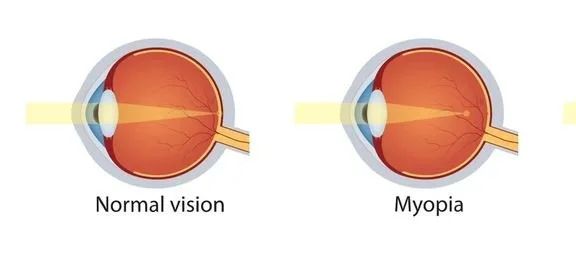
Myopia, or short-sightedness, occurs when the eye grows longer than normal. This causes light to focus in front of the retina rather than on it, producing blurry distance vision. Myopia progression is a prevalent eye issue globally, and until recently there were very limited ways to treat it. Now, optometrists and patients have a range of therapeutic options to treat progressing myopia and therefore reduce the prevalence of short-sightedness.
Known risk factors
Family history Myopic parents or siblings significantly raise risk
Screen time Extended device use, especially at close range
Limited outdoor time Less time spent outdoors in natural light
Why treat it — associated risks
Myopia is not simply a refractive condition. Higher myopia significantly increases the risk of serious eye conditions that may cause permanent, uncorrectable vision loss — conditions that stronger glasses cannot fix. These include myopic maculopathy, glaucoma, retinal detachment and cataract.
What can we do to prevent its progression?
Early intervention is best. At Eyetech, we manage many young myopes and prescribe all forms of treatment — individually or in combination. Our state-of-the-art instrumentation can accurately measure and monitor your child's myopia over time.
Treatment Options for Myopia

Miyosmart Spectacles
This revolutionary spectacle lens based on patented Defocus Incorporated Multiple Segments (D.I.M.S.) Technology was developed to correct the visual defect on its entire surface and has a ring shaped treatment area to slow down myopia progression. This allows the wearer clear vision and manages myopia simultaneously.

Orthokeratology (Ortho-K)
Ortho-K is a rigid lens worn overnight that is customised for each individual wearer to reversibly reshape the eye. Patients enjoy clear, glasses-free vision throughout the day. Ortho-K has been proven to successfully reduce myopia progression by approximately 50%. Eyetech was one of the first optometry clinics in Victoria to implement Ortho-K lenses, so we have strong knowledge and expertise in this area of contact lenses.

Soft Contact Lenses
MiSight® 1 day daily disposable contact lenses are proven to slow the progression of short-sightedness (myopia) in children. These lenses are convenient to use, and are a good alternative to spectacles for sport and other recreational activities. They have a similar efficacy to ortho-keratology. MiSight® 1 day is the first soft contact lens to receive U.S. Food and Drug Administration approval specifically for myopia control in children.
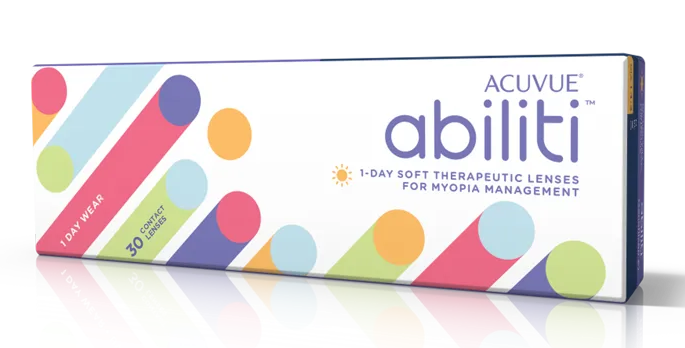
Abiliti® 1-Day contact lenses feature RingBoost™ technology with specialised treatment zones designed to both correct vision and help slow myopia progression. One zone provides clear visual correction, while the surrounding treatment zone delivers myopia control. The lenses are specifically designed for paediatric patients, with a smaller diameter to support easier handling and improved comfort for younger wearers.

Atropine eye drops
Atropine is a compounded topical medication that increases the size of the pupils but also is thought to work on cells at the back of the eye to slow down eye length growth. The effect of atropine is dose dependent; the higher the dose, the stronger the myopia control effect. They are typically instilled once each eye at night, and are not available under PBS. Atropine drops have been proven to slow down myopia progression by approximately 50%.